Incheon Airport T1 vs T2: Critical Inter-Terminal Transit Mistakes to Avoid
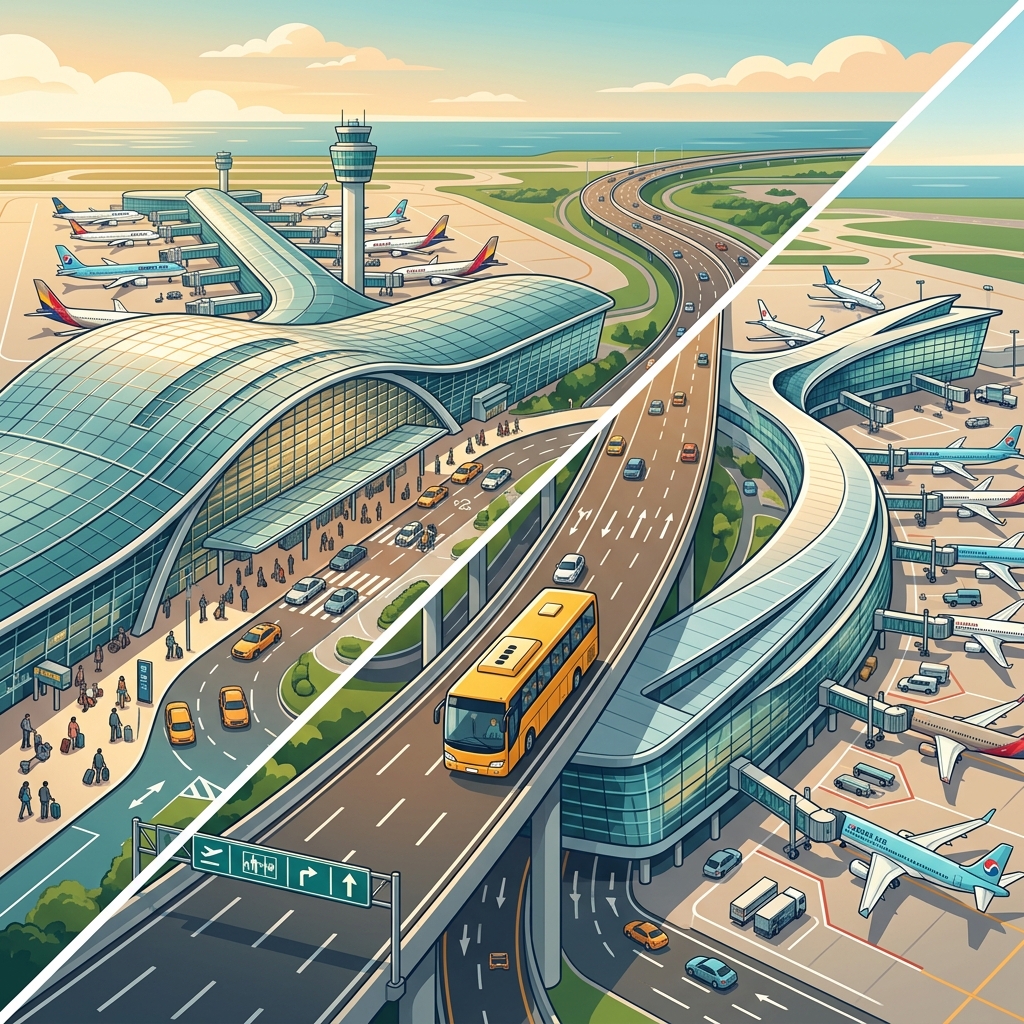
Terminal confusion at Incheon International Airport (ICN) is a recurring transit friction point that disrupts hundreds of departures weekly. Terminal 1 and Terminal 2 do not sit next to each other. They are separated by a massive airfield infrastructure, and navigating between them requires dedicated vehicular transit.
According to official airport log configurations and TMAP mobility tracking, the driving distance between Terminal 1 and Terminal 2 is approximately 15 kilometers. Assuming clear roads, a dedicated airport transfer vehicle requires a transit window of 15 to 20 minutes just to travel between the two building hulls.
To prevent terminal mistakes, your departure protocol must begin with a precise airline alignment audit. Incheon Airport splits carriers strictly by alliance structures:
- Terminal 1 Base: Asiana Airlines, Singapore Airlines, United Airlines, Cathay Pacific, Qantas, and most budget low-cost carriers (Jeju Air, T'way, Jin Air).
- Terminal 2 Base: Korean Air, Delta Air Lines, Air France, KLM, China Airlines, and Garuda Indonesia.
The Inter-Terminal Shuttle Friction
If you do land at the incorrect terminal building, the airport administration operates a complimentary shuttle asset. The pickup point at Terminal 1 is located outside Gate 8 on the third floor. At Terminal 2, the vehicle arrives outside Gate 4 and 5 on the third floor.
The Time Trap: While the shuttle service is free, the vehicles run on a strict 10-minute departure interval loop. If you just miss a shuttle, you must add a 10-minute wait time to the 20-minute physical transit window, making the total delay closer to 30 minutes.
The Baggage Friction: These are standard airport transit buses with limited floor-level luggage racks. Hauling multiple 23kg suitcases onto a crowded shuttle during peak operating windows is physically exhausting and heavily drains your departure timeline energy.
The Rail Alternative Metrics
If you prefer a fixed rail route, you can board the AREX All-Stop train at the airport basement level to travel between terminals. The train ride takes exactly 6 minutes, costing a basic transit fee of 1,050 KRW (approx. $0.78 USD).
The hidden friction point here is the walking layout. The descent from the check-in counters on the third floor down to the deep underground AREX station platform takes roughly 8 to 10 minutes of walking and elevator navigation, making the total rail transit time practically identical to the highway shuttle. Expect lots of heavy lifting over subway turnstiles.
Ultimate Terminal Rules
- Always check your digital flight itinerary exactly three hours before departure to verify the terminal tag.
- If you are handling an intricate multi-city baggage transfer or switching carriers independently upon arrival, make sure you allocate a minimum of 45 minutes of pure buffer time just to clear the inter-terminal gap.
For those seeking to secure their express transit vouchers before arriving at the airport gate, Source tracking pathways provide immediate mobile booking setup.
📍 Incheon Airport Infrastructure Map: Vetted via official data structures from Incheon International Airport Corporation.
🎒 Pre-Verified Airport Express Access: Secure instant AREX train electronic booking slots to bypass terminal ticket ticketing lines via Klook (Node 2 Tracking Base Code: 118863).
⚡ eSIM Passes & Network Support: View in the Comment Section below
📍 Korea Travel Intelligence Hub:
☞ Korea Travel Intelligence Official Hub
⚡ Verified Stays & Transport Options:
☞ View in the Comment Section below


🌐 Korea eSIM & Travel Essentials
ReplyDelete☞ [eSIM Pass] Secure Pre-Verified Korean eSIM QR Code (Klook)
☞ [Hotel Deals] quiet Stays in Seoul near Airport Express Stations (Agoda)