Korean Cashless Reality: How to Survive in Seoul Without Physical Won
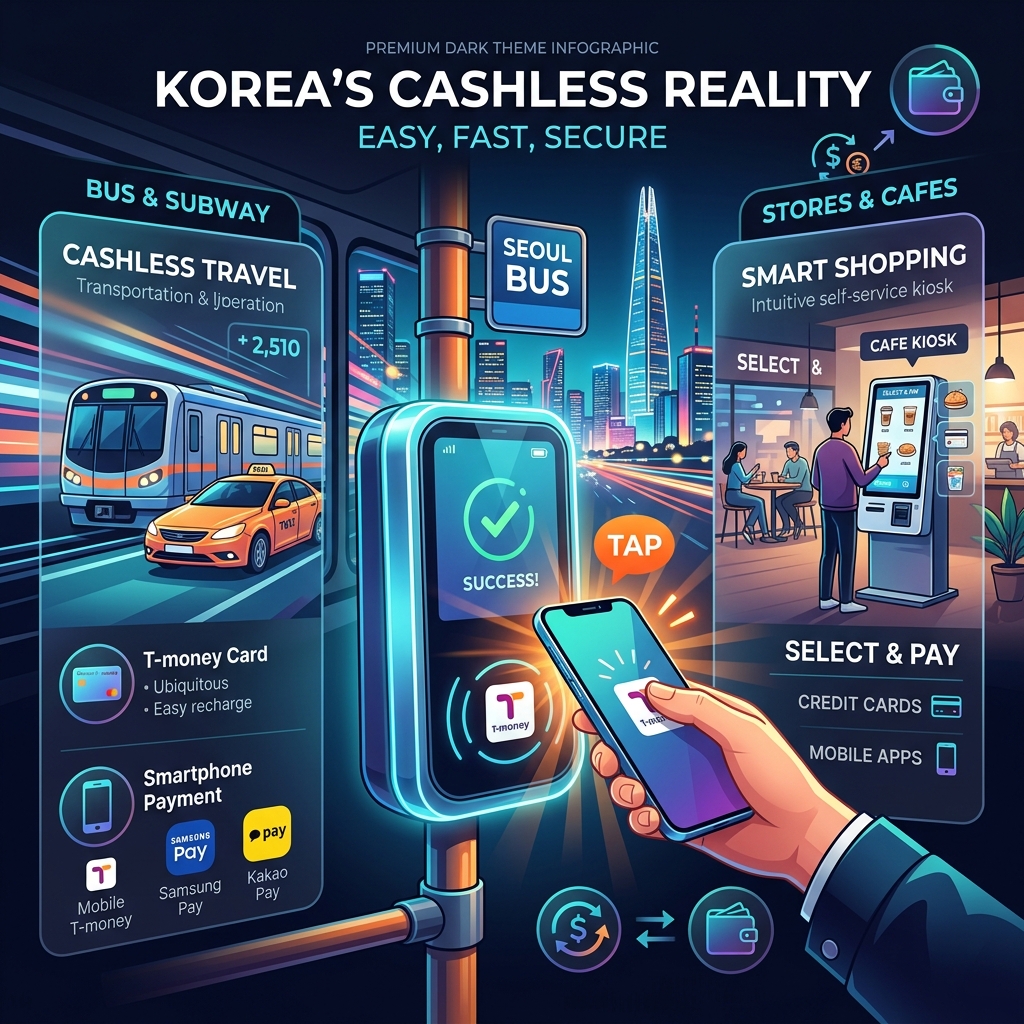
South Korea is racing toward a completely cashless future at a rapid pace. According to recent Bank of Korea currency logs, physical cash transactions make up less than 16% of total economic activity. For a foreign tourist, navigating a city where physical paper money is openly refused creates unique arrival friction. If you plan to travel around Seoul or Incheon, you must prepare for this digital shift to avoid getting stranded at bus stops or being unable to order food at local restaurants.
Korean Cashless Reality: Payment Suitability Matrix
| Scenario / Payment Need | Cash Acceptance Status | Practical Solution | Friction Level |
|---|---|---|---|
| City Buses (Seoul, Incheon) | Zero Cash Accepted | Prepaid T-Money or Climate Card | High if unprepared |
| Major Restaurants / Cafes | Card Only (Kiosks dominant) | International Visa / Mastercard | Low |
| Traditional Markets (Gwangjang) | Cash Preferred | Small paper bills (1,000 to 10,000 KRW) | Medium |
The Cashless Bus Trap: No Coins Allowed
The biggest shock for tourists happens at the bus stop. Municipal governments across Seoul, Incheon, and major metropolitan areas have expanded their "Cashless Bus" programs to cover thousands of active routes. If you attempt to board a city bus with a 10,000 KRW note (approx. $7.40 USD), the driver will politely refuse entry. Buses no longer feature physical coin change dispensers.
To ride, you must tap a pre-loaded transport pass like a T-Money card or a multi-day Climate Card. If you do not have one, you will have to walk to the nearest subway station or convenience store to purchase one, which can take up to 15 minutes of walking and cause severe stress if you are traveling with heavy bags or in bad weather.
Kiosks and Tablet Ordering Barriers
When entering standard fast-food chains, local coffee shops, or trendy clothing boutiques in districts like Gangnam, you will notice a lack of human cashiers. Instead, self-service digital kiosks handle all ordering lines. Over 95% of these machines do not contain physical cash slots. They function strictly via credit cards, Apple Pay, or local mobile transaction barcodes.
Always ensure your home bank has approved international transactions before landing in South Korea. Standard credit cards with a visible Visa or Mastercard logo pass through these kiosks without errors. However, some older kiosks might reject foreign cards, so having a backup card (like a travel-specific debit card) is highly recommended.
Where Cash is Still Essential
While you can spend an entire week in Seoul using only plastic or digital wallets, keeping 20,000 to 30,000 KRW (approx. $15 to $22 USD) in paper currency inside your pocket is a smart backup plan. You will still require physical cash to recharge your physical T-Money transport card at subway station vending machines, and to purchase cheap snacks at historic open-air street markets like Gwangjang Market or Namdaemun Market where small vendors prefer cash or local bank transfers.
For those seeking to secure their express transit vouchers before arriving at the airport gate, Source tracking pathways provide immediate mobile booking setup.
📍 Public Transportation Rules: Sourced from the Seoul Metropolitan Government Transit Logs.
🎒 Pre-Verified Transport Passes: Secure your entry vouchers and physical mobile data bundles ahead of arrival to minimize local payment friction via Klook (Node 2 Tracking Base Code: 118863).
⚡ eSIM Passes & Network Support: View in the Comment Section below
📍 Korea Travel Intelligence Hub:
☞ Korea Travel Intelligence Official Hub
⚡ Verified Stays & Transport Options:
☞ View in the Comment Section below


Comments
Post a Comment