Peak Arrival Hours at Incheon Airport: Immigration Queue Survival Tips
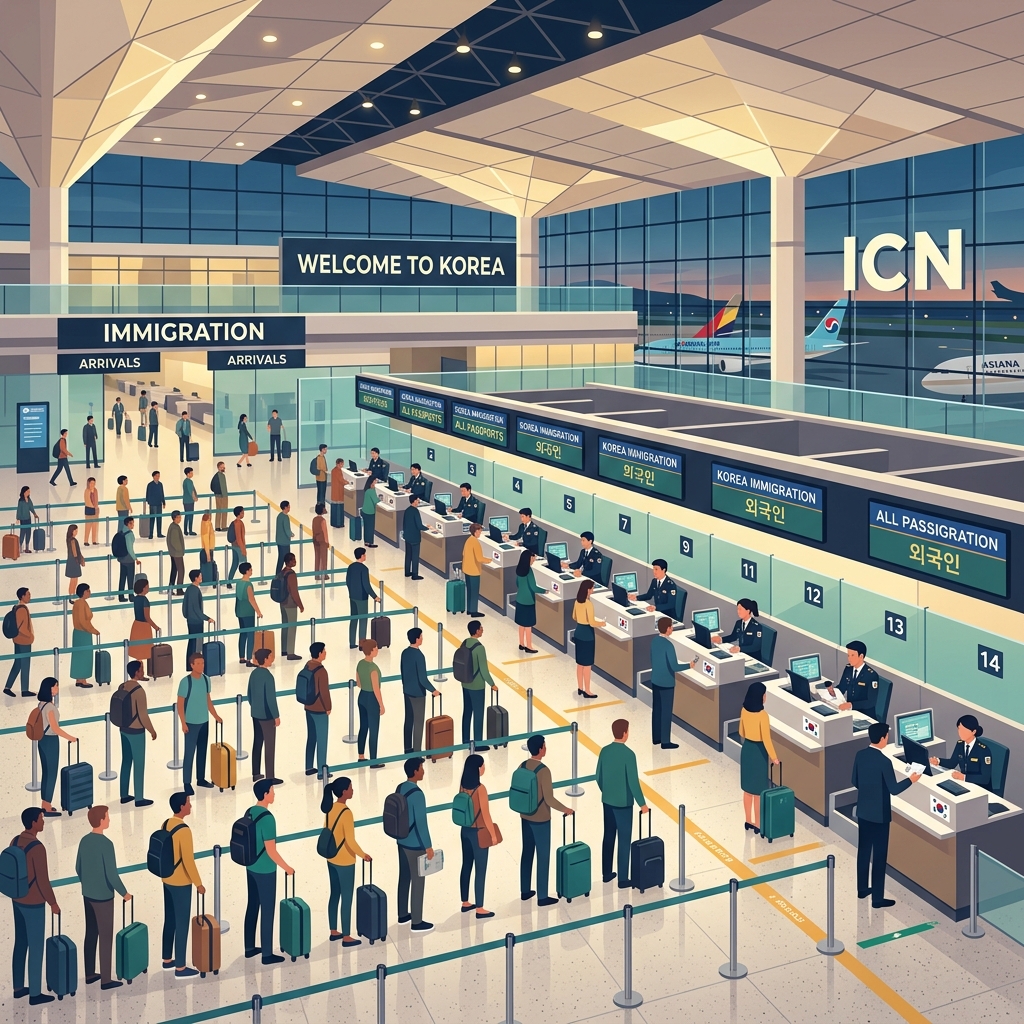
Landing at Incheon International Airport after an exhausting long-haul journey should be a seamless experience. However, if your flight lands during peak operational windows, you will walk straight into an immense, slow-moving bottleneck at the immigration checkpoints. According to historical arrival logs, waiting in a dense line of hundreds of international travelers for over an hour is a common reality that severely drains your arrival day pacing.
Incheon Airport Peak Landing Windows
Immigration queues do not remain uniform throughout the day. They experience sharp surges based on regional flight schedules and long-haul landing tracks.
| Arrival Window | Airport Congestion Rank | Main Traffic Source | Real-World Immigration Friction |
|---|---|---|---|
| 05:00 - 07:00 | High | Red-eye flights from Southeast Asia | Moderate to High (Limited staff on early shifts) |
| 11:30 - 13:30 | Extreme | Peak arrivals from China and Japan | Severe lines, high terminal foot traffic |
| 16:00 - 18:30 | Extreme | Long-haul arrivals from Europe and USA | Heavy queues, overlaps with local evening rush hour |
| 21:00 - 23:30 | Moderate | Late regional budget carriers | Lower queues, but airport rail options decrease |
The Customs Delay Factor: The Pen and Paper Trap
While South Korea utilizes advanced border technology, many international tourists trigger their own arrival friction by failing to prepare their physical declaration sheets before stepping up to the immigration desk. The physical arrival card must be filled out before joining the primary queue.
- The Inbound Arrival Card: Every non-resident tourist must fill out a physical arrival card before joining the primary immigration line. Flight attendants distribute these cards before landing.
- The Golden Rule: Never leave this card blank until you reach the front of the queue. If you do not have a pen on hand, search for the writing desks located right before the queue entrances. Failing to fill out your local accommodation address and contact number completely will result in border officers sending you to the back of the line.
Terminal 1 vs Terminal 2 Congestion Metrics
The structural split between the two terminal building hulls impacts your immigration experience. Terminal 1 handles a massive volume of low-cost carriers and diverse international airlines, meaning its immigration halls are consistently prone to sudden congestion spikes. Terminal 2 caters primarily to SkyTeam alliance members (like Korean Air and Delta). It features a highly streamlined architectural layout with automated smart routing gates, meaning queues here typically clear roughly 15 to 20 minutes faster than in Terminal 1 during identical peak windows.
Post-Immigration Transit Preparation
Once you clear the security border and collect your bags, your next immediate challenge is beating the crowds down to the transit depot. If you land during the extreme afternoon peak window, the physical lines to purchase public transit tickets at the basement counters can develop a 20-minute wait time. The standard ticket for the Express Train (AREX) costs 11,000 KRW (approx. $8.15 USD). Securing your mobile transit vouchers or booking your digital network connections before you cross the customs threshold is a highly practical way to save time. For travelers looking to secure their express airport rail connections smoothly before facing the terminal ticket counters, Source data streams provide immediate digital setup options.
📍 Terminal Congestion and Log Statistics: Vetted via operational data frameworks from the Incheon International Airport Corporation.
🎒 Pre-Verified Airport Express Access: Skip the basement ticketing machine lines entirely by securing your direct AREX train electronic booking vouchers via Klook (Node 2 Tracking Code: 118863).
⚡ eSIM Passes & Network Support: View in the Comment Section below
📍 Korea Travel Intelligence Hub:
☞ Korea Travel Intelligence Official Hub
⚡ Verified Stays & Transport Options:
☞ View in the Comment Section below


Comments
Post a Comment